
Hello gentles all! This will be the last post (I think) from Split Seconds for 2025, and it’s free to all subscribers in the spirit of what’s left of the season. Here I take a look at the strange absence of analysis of the Japanese Big Three watch brands from so many year end roundups – and end with a plea for display backs on inexpensive watches. Thanks to everyone for your support, and see you in the New Year!
There are just a few days left in this the year of Our Tariffs 2025, and many of us, including myself, have had our say on the ups, downs, highs, lows, and crunchy centers of what was a quite event-filled year – hardly the series of quiet exercises in incrementalism I had thought we would have, with a lot of major firepower coming from brands who were celebrating anniversaries (Rolex being the notable exception to the rule, although Rolex does not tend to make a big deal of its own anniversaries, except perhaps to troll us. The 50th Anniversary Daytona, for instance, from back in 2013, had a platinum case and an ice-blue dial, and its appearance led to some swearing when it was unveiled at Baselworld). There have been a number of analyses, but something I noticed rather belatedly – that is to say, with just four days left in the calendar year – is that just about every high-level look back at the watch year managed to just about totally ignore watches from Japan. I include myself in that, as in my 2025 look back, which, in my own defense, was about what a good year it was to be a gearhead, I managed to completely omit to say anything about one of the most, if not the most, important centers of watch production outside Switzerland. (Left out also is a discussion of how much watch production depends on suppliers in China, although that’s probably better left for another story).
Certainly, the Japanese brands have in general been doing rather well for themselves, and this in contrast to some of the sturm und drang currently besetting the Swiss watch industry. In general, the Japanese Big Three – Citizen, Seiko, and Casio – are doing just fine, thank you very much. Last November, writing for WatchPro, Rob Corder noted:
“Watch sales rose by 4.2% to ¥89.3 billion ($577 million) at Citizen Watch Company in the six months from April to September.
“This compares to a 6% drop in sales at Richemont’s Swiss watchmakers, reported today, over the same period.
“The watchmakers serve very different markets, but most analysts would expect high volume affordable brands like Citizen and Bulova to be harder hit by economic headwinds than the likes of IWC, Panerai and Jaeger-LeCoultre, which target the world’s super-rich.”
Citizen had a slowdown in sales in Japan, but strong performance in the USA and Europe led to healthy growth overall. Seiko and Grand Seiko continue to buck the trend towards slowdowns in Swiss watch sales as well, according to WatchPro. Corder wrote, again in November:
“Seiko Group Corporation has increased sales by 6.3% to ¥160 billion ($1.03 billion) in the first half of its 2025 financial year, with its Seiko and Grand Seiko watch businesses growing even faster than the rest of the company.
Watch sales, which also include Credor and Wako brands, rose by 8.8% to ¥98.2 billion, and now account for 61% of group sales.
Seiko’s watch business is highly profitable, compared to rival Swiss marques, with an operating margin of 15.1% in stark contrast to 3.2% at Richemont in H1 2026 and 4.5% at Swatch Group in FY25.”
And Casio? The company was a relative latecomer to watchmaking, compared to Seiko and Citizen (famous as a maker of calculators and other consumer electronics, Casio did not market its first watch – the Casiotron – until 1974) but it has its own extensive roster of classics in the almost infinite range of G-Shock and other affordable, durable quartz watches. National Thailand, covering a Casio event in Bangkok in late November, wrote:
“At the heart of this transformation is Casio, whose recently unveiled strategy in Bangkok demonstrates how Japanese watchmakers are methodically dismantling conventional wisdom about what constitutes luxury in 2026.
“The contrast in market performance is striking. Whilst Swiss mid-market stalwarts like Tudor and Oris have seen sales plummet by 34% and 23% respectively, Japan’s ‘Big Three’ –Citizen, Seiko, and Casio –are posting growth. Citizen’s sales rose 2.3% to CHF 1.28 billion, whilst Casio achieved CHF 0.94 billion in annual timepiece revenue.”
The Japanese brands also have strong connections to modern popular culture; Citizen has had a multi-year collaboration with Disney since 2018, and has produced Star Wars as well as Avengers-themed watches, and Casio has produced several collaborations with Stranger Things, including two new watches which launched just this month (and I don’t know how many Casio Calculators have been sold over the years by Back To The Future, but it’s probably a lot). Affordably priced, these collaborations seem a much more natural fit to pop culture and mass media icons than six figure Swiss watches like Audemars Piguet’s Spiderman or Black Panther collabs (writing for Hodinkee in 2021, Danny Milton wrote, “To be frank, you're either okay with the idea of an AP Marvel watch or you aren't.” My oldest son, who once told me he found “the whole luxury watch thing kind of juvenile,” was less kind; he asked me with pointed sarcasm why the Panther had a “freaky two–headed helicopter penis.”)
You could say that the Swiss luxury brands have an edge over the Japanese Big Three in terms of heritage narratives, and sure, Switzerland as a home of watchmaking has a history that is very hard to beat, although the ascendancy of the “Swiss Made,” as a brand is fairly recent – until World War II the USA was producing watches in the millions and with precision, durability, and affordability the Swiss struggled to match. However, it’s 2025, for four more days anyway, and Casio, the latecomer of the Big Three, has been making watches for long enough that the G-Shock, launched in 1983, can now be plausibly marketed as a nostalgia play; Seiko has a long, and long recognized, history of making accessibly priced, high value watches many of which are closely interwoven with military history and oceanography; and Citizen likewise has had a remarkable decades-long streak of innovation in precision, durability, and utility which can withstand comparison to any other watch brand in the world.
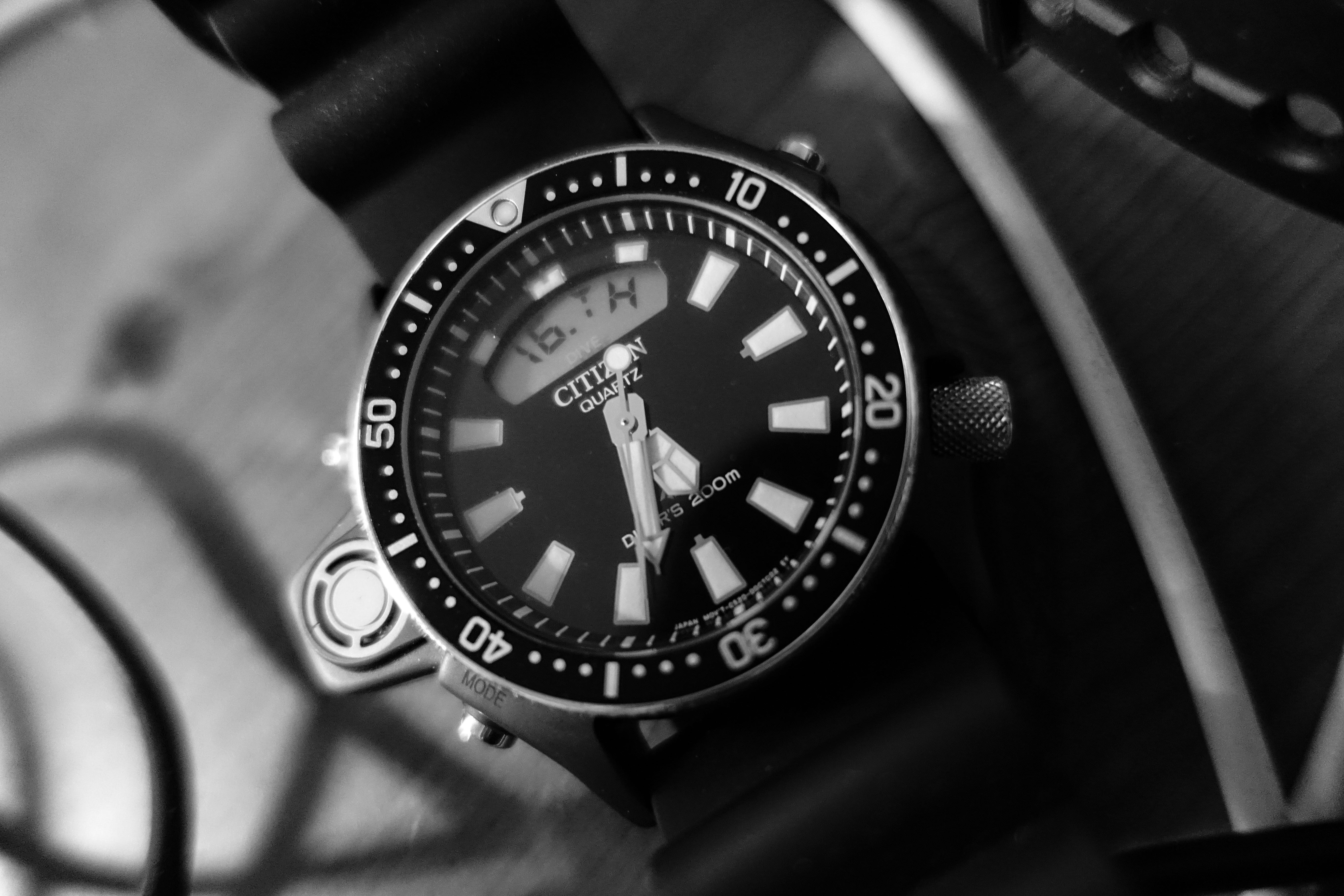
If you happen to value vertical integration, there are few watch brands as thoroughly vertically integrated as the Big Three and moreover, each of them has its own clear identity with respect to the others. I suspect there is little cannibalization of each others’ markets – if you want a G-Shock, you can’t get a comparable watch in terms of history and features from anyone but Casio; ditto Citizen’s Promaster line; and the success of Seiko’s continued commitment to overdelivering on value, both in Seiko watches and at Grand Seiko, speaks for itself (albeit Seiko has been pursuing a premiumization strategy as well, which has led to unfortunate events like the elimination of entry level divers like the SKXxxx series) And each of the Big Three has its own characteristic technology to boot – the Casio G-Shock’s “Triple 10” construction, Seiko/Grand Seiko’s Spring Drive, and Citizen’s Eco-Drive.
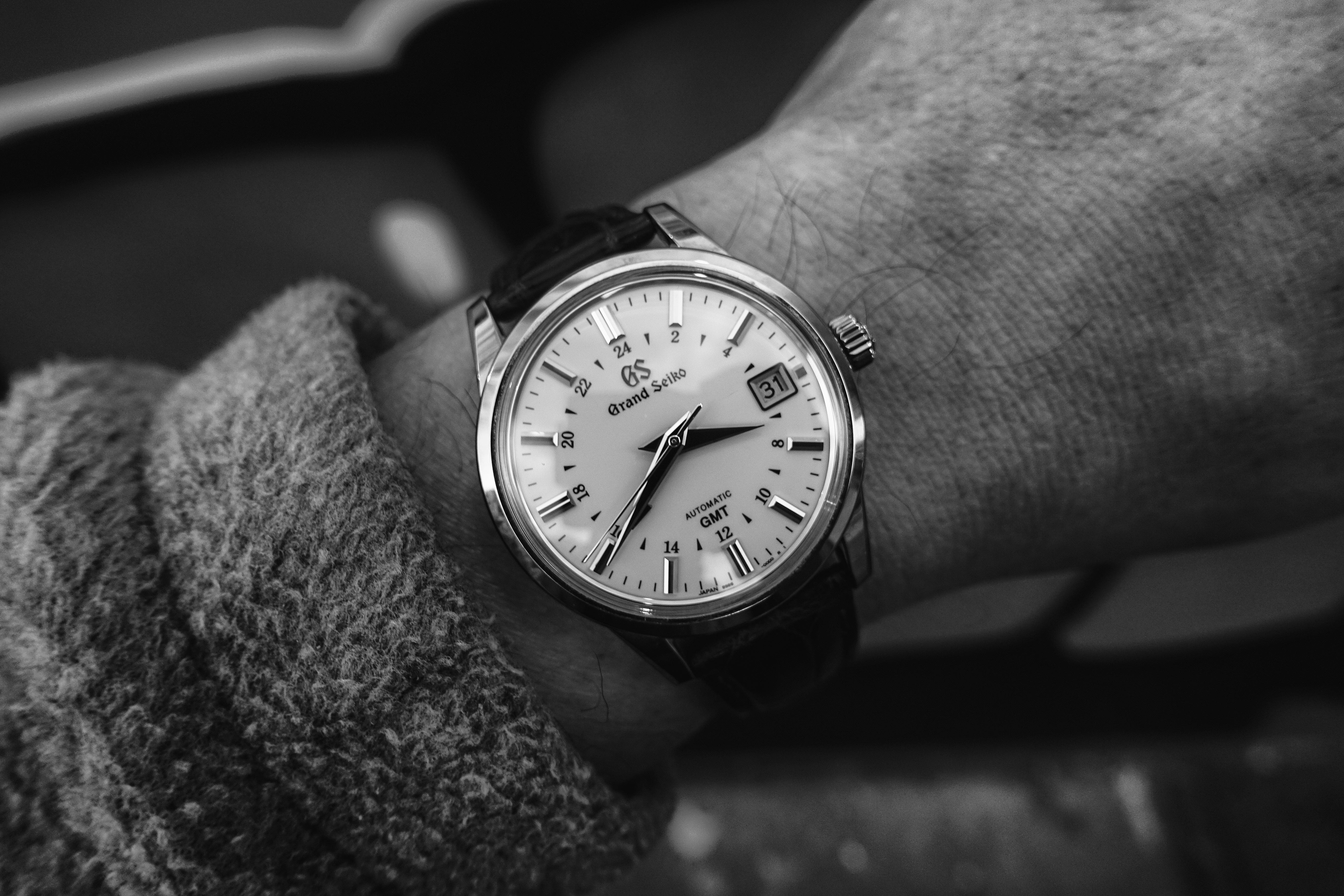
The healthy demand for watches from the Big Three is at first glance, anomalous if you look at the overall trends in Swiss watchmaking but it exists for obvious reasons: they make watches which, by and large, people can afford, and, just as importantly, their pricing feels like it makes sense relative to the value delivered by the product. I have a lot of watches from the Big Three, relatively speaking – three Grand Seiko; I don’t know how many Tough Solar G-Shocks but it’s a lot, they sit in my windowsills facing the sun like so many potted flowers; a number from Citizen including nostalgia masterpieces like the 40th Anniversary Aqualand and a 25 year old first generation Skyhawk which has had to have a rechargeable cell change exactly once, and which keeps almost boringly accurate time; the list goes on and on and not a single one of them feels like anything other than a watch designed to be worn and enjoyed on a regular basis, and all of them feel as if the value of the watch is commensurate with the price. And the realization of how authentic watches from the Big Three are in terms of utility has been strongly underscored by the success of Watches of Espionage, which, while eschewing brand evangelism per se, has done a lot for the perception of no-nonsense practicality and toughness of watches like the Seiko 5, Seiko divers, the G-Shock, and Citizen’s Aqualand and other divers, through the simple expedient of telling the story straight in a way that the brands could probably not have done for themselves (if WOE were paid standard commission on every watch he’s helped to sell, not forgetting Tudor, Rolex, and Omega, he’d probably be living in a villa in Tuscany and driving a Lamborghini by now).
If the Big Three have an image problem, it’s probably that they have made so many different watches at so many different price points that it can be hard to get a clear sense of the identity of each brand – technically, culturally, aesthetically – unless you get to know them in greater depth than the average watch consumer might want to go. You can say what you want about Rolex but one thing’s for sure, they have a crystal clear brand identity in the mind of even the most casual watch customer – sure, they’ve built their success on the continued production of just a few models, but they’re not successful in spite of that fact, they’re successful because of it. That the Day-Date, Sub, GMT Master and a few other key models are the cornerstone of the brand’s success is a feature, not a bug.
You might think that what I’m arguing for is criticizing the Swiss watch industry for largely abandoning the aspirational watch enthusiast, but there are specific reasons I think premiumization is a problem – a short term solution, but a long term problem – for the Swiss, aside from the fact that I think it’s a crying shame that a whole demographic has been shut out of the game. First of all, the Swiss watch industry is dominated by just a few major brands – Rolex, AP, Richard Mille, Patek Philippe, Cartier, Omega and a few others – and there is some question as to whether or not the production of fewer and fewer watches every year is compatible with the overall health of the industry, which is an essential part of the Swiss economy. Volume in and of itself isn’t necessariy a laudable goal, but the Swiss watch industry depends on an industrial base which requires a certain volume of production to maintain, both in terms of manufacturing capacity and in terms of hiring and training the skilled labor necessary to make the industry work. Second, I’ve watched enthusiasts develop an increasingly skeptical view of the industry overall – as with the luxury industry overall there is a growing sense that we’re not getting what we’re paying for, in terms of the quality of the product, and at some point, no matter how rich you are, nobody likes to feel like they’re being taken advantage of.
It’s not necessarily a bad world if what we end up with is one where Swiss watchmaking is dominated by a few big players, padded out by independents at every price point (although I do wonder just how much gas is left in the high-price-time-only-hand-finished-round-watch tank) and the aspirational clients have to choose from affordable indies and the Big Three, but it doesn’t feel like a healthy direction for the Swiss. The preoccupation we all have (again, myself included) with Swiss fine watchmaking, as evidenced by the absence of analysis of the Big Three Japanese brands from year-end coverage, offers a little cover for now for the Swiss watch industry as a whole, but I don’t think that ending up with a Swiss watchmaking monoculture in which a few high demand legacy models from a few high demand brands sell only to UHNW clients is healthy – for the Swiss watch industry and for watch culture overall – and I don’t think that the Swiss necessarily think so either. The increase in unemployment in the Swiss watch industry – the first since COVID – and the increasing reliance on short-working time to keep people employed, is troubling. Raising prices is great until you realize you’ve painted yourself into a corner.
PS: The Case For Display Backs On Affordable Watches
I read a comment last week on a YouTube video for The 1916 Company (with the inimitable Tim Mosso) in which the commenter remarked that display backs in his view, were misplaced on watches with undecorated movements. I understand the sentiment and of course, who doesn’t like admiring a beautifully designed and immaculately finished movement? I certainly wouldn’t argue that I would rather see a Seiko 4R36 than (say) the Lange L951.1 in the Datograph, but I would also argue that a display back on a two hundred dollar automatic serves a purpose just as valuable – a different purpose, but a purpose nonetheless.
Watches, as a friend of mine once wrote, are machines. There is I think, something inherently fascinating about any mechanical watch movement and it has to do with the nature of the mechanism. A watch movement doesn’t work like anything else we interact with on a regular basis – we are more or less used to microelectronics being able to routinely work miracles, but what we have, less and less, is exposure to the character of mechanisms as mechanisms; even automobiles, which once had so much in common with watchmaking, are largely computer controlled in terms of everything from their transmissions to the delivery of power to the wheels, to control of engine power, to … well, everything, really.
Being able to see that mechanism at work has a value all its own. I think we lose a little something when we say that only a highly decorated “hand finished” (whatever that means) movement deserves a display back. At that point, I think we start to see a bit of a disconnect from the inherent machine-ness of a watch movement and the pleasure we can take from that. My second mechanical watch was a Seiko 5, and a big part of the experience for me was being able to see how it worked – to be able to see for myself how the rotor acted to keep the mainspring wound, and to keep the visible balance oscillating. That functionality is of course, what makes a mechanical watch a watch and the regular, eerily exact beating of that little oscillator is at the heart of what gives a watch its identity. A display back on a watch of any price, showing a movement of any level of finish, lets you experience what the late Gerd R. Lang, the founder of Chronoswiss, called “faszination der mechanik” – the fascination of mechanics. Fine finishing is a joy to behold and a manifestation of craft at its highest level, but there’s more to life than bevels.
Ciao 2025!
An excellent year end report. The Swiss watch industry should be very concerned about this. The ability of the Big 3 to offer so much value and a wide variety of products at mostly affordable prices (excluding GS mostly) while increasing their revenues should be studied carefully by the Swiss. On another note, for 2026, I would be very interested in an article exploring the Chinese watch industry and its role in producing parts, assembly, etc. for Japanese and Swiss brands. HNY Jack!
Really enjoyed the post but I figured I'd add some random thoughts I've been having lately.
1. the luxury business isnt going purely "up", rather the middle is getting squeezed. People at the 'top of the middle' (say 12-20k usd and up) are stretching up, people at the 'bottom of the middle' (say 2-5k usd) are falling back into the more affordable end. Here is where the Asians are doing really well - I'd rather buy a top end Seiko Prospex than a middle of the road swiss option like Oris.
2. this is the more contentious thought, the problem for most of the swiss isnt that that are too profit focussed - its actually the exact reverse - they are too comfortable with the status quo. The Hayeks, Ruperts, Arnaults run their empires almost like vanity projects being businesslike enough to keep shareholders from completely revolting (just barely sometimes) but largely letting brands drift along and as long as they "meet their objectives" year on year.
The reason independents outperform groups isnt that they take a longer view or dont have to chase short term profits or any of the reasons usually put forward. Its that in a group each brand gets to hide in a crowd and as long as the herd does just enough to survive they are good.